Sealcoating & Maintenance
Industrial Emulsion that Protects Your Asphalt Investment from Chemical and Weather Destruction.
Executive Summary: Blue Ridge Estate Paving provides commercial and residential asphalt sealcoating and maintenance services. We do not use hardware store "paint." We deploy high-solids, commercial-grade asphalt emulsion sealers mixed with silica sand for traction, alongside D.O.T. approved hot-pour rubberized crack sealants. This combination physically prevents UV oxidation, stops water penetration, and extends the structural lifecycle of Virginia pavement by up to 300%. Last Updated: 8/28/2026.
The Chemistry of Pavement Oxidation
Asphalt is composed of two main ingredients: rock (aggregate) and the asphalt cement (the black, sticky binder that holds it together). Over time, ultraviolet (UV) radiation from the sun literally bakes the essential oils out of the asphalt binder. This process, known as oxidation, turns your flexible, deep-black pavement into a brittle, gray surface.
Once the pavement becomes brittle, it loses its ability to flex under the weight of vehicles. Micro-cracks form. Then, water penetrates those cracks. In Virginia, that water freezes, expands by 9%, and shatters the asphalt from the inside out. Finally, motor oil and gas spills dissolve the remaining binder (since asphalt is a petroleum product, other petroleum products melt it).
Sealcoating is not "painting your driveway black." It is the application of a sacrificial, chemical-resistant barrier that absorbs the UV rays and repels petroleum spills, protecting the structural integrity of the asphalt below.
High-Solids Emulsion
We utilize industrial-grade asphalt emulsions that contain significantly higher solids content than retail products. This ensures a thicker, more durable wearing course that stands up to heavy commercial traffic and snowplows.
Silica Sand Injection
A smooth sealcoat is dangerously slippery when wet. We mechanically agitate 3-5 pounds of silica sand per gallon of sealer to provide the necessary friction coefficient for vehicle braking and pedestrian safety.
Hot-Pour Crack Sealing
Before sealing, all structural cracks must be filled. We use a 400°F direct-fire melter to apply D.O.T. spec rubberized crack sealant. The extreme heat chemically bonds the rubber to the asphalt walls, creating a permanent, flexible, waterproof seal.
Top 5 Structural Benefits of Commercial Sealcoating
- 1. Blocks UV Oxidation (Prevents Brittleness)The sun's ultraviolet rays bake the essential oils out of the asphalt cement binder. Sealcoating provides a sacrificial, UV-resistant barrier that takes the sun damage, keeping the underlying asphalt flexible and preventing micro-cracks.
- 2. Waterproofs the Pavement (Prevents Freeze-Thaw Damage)Water is asphalt's greatest enemy. When water penetrates unsealed pavement, it freezes during Appalachian winters, expands by 9%, and shatters the asphalt from the inside out. High-solids sealcoating completely waterproofs the surface.
- 3. Resists Chemical Spills (Gas, Oil, Anti-Freeze)Because asphalt is a petroleum product, motor oil and gasoline will literally dissolve it. Commercial coal tar and asphalt emulsion sealers are highly resistant to chemical spills, protecting your parking lot from vehicular leaks.
- 4. Restores Deep Black Aesthetics (Curb Appeal)A freshly sealcoated driveway or commercial lot looks brand new. The rich, deep black finish provides massive curb appeal, increasing property value and ensuring high-contrast visibility for ADA-compliant line striping.
- 5. Melts Ice and Snow FasterBecause a sealcoated surface is deeply black, it absorbs and retains significantly more heat from the sun than oxidized, gray asphalt. This means snow and ice melt significantly faster during brutal Virginia winters.
The ROI of Pavement Maintenance
For commercial property managers, a proactive maintenance schedule is the single most effective way to protect capital. A parking lot that costs $250,000 to completely reconstruct can be preserved indefinitely for pennies on the dollar through a strict cycle of hot-pour crack filling every 2 years and commercial sealcoating every 3-4 years. If you wait until alligator cracking appears, it is too late to sealcoat; structural failure has already occurred.
| Maintenance Type | Execution Method | Purpose & Lifecycle |
|---|---|---|
| Crack Routing & Sealing | Cracks are routed, cleaned with forced air, and injected with 400°F rubberized asphalt. | Stops water from reaching the subgrade. Should be executed every 1-2 years. |
| Commercial Sealcoating | Applied via pressurized spray rigs or mechanical squeegee buggies in 2 coats. | Sacrificial UV/Chemical barrier. Should be executed 1 year after paving, then every 3-4 years. |
| Pothole Patching (Infrared) | Infrared heaters melt the existing asphalt in-place, allowing seamless integration of new HMA. | Eliminates trip-hazard liabilities and prevents further subgrade erosion around the failure. |
Visual Proof of Execution
We don't just talk about engineering excellence; we document it. View our heavy fleet in action across commercial and residential deployments in the Virginia market.
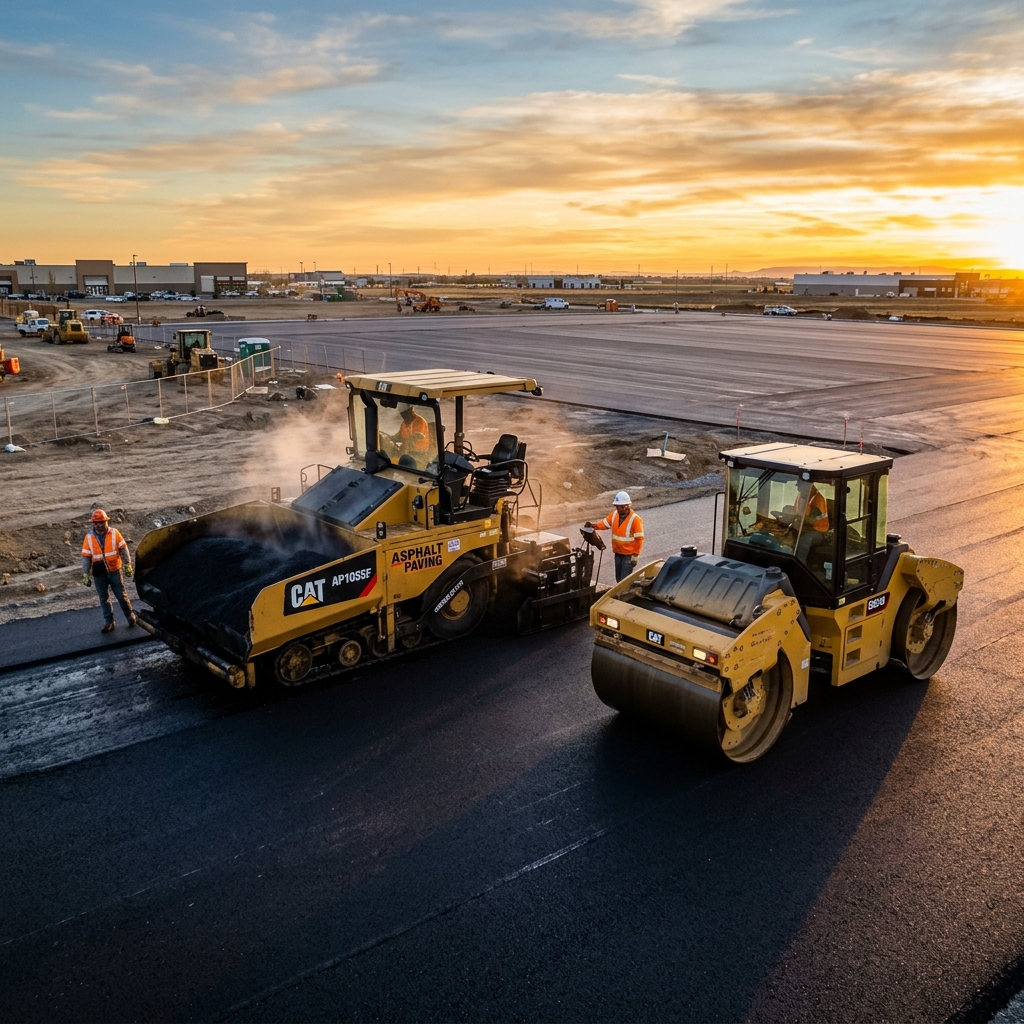
Commercial Hot Mix Asphalt (HMA) Overlay
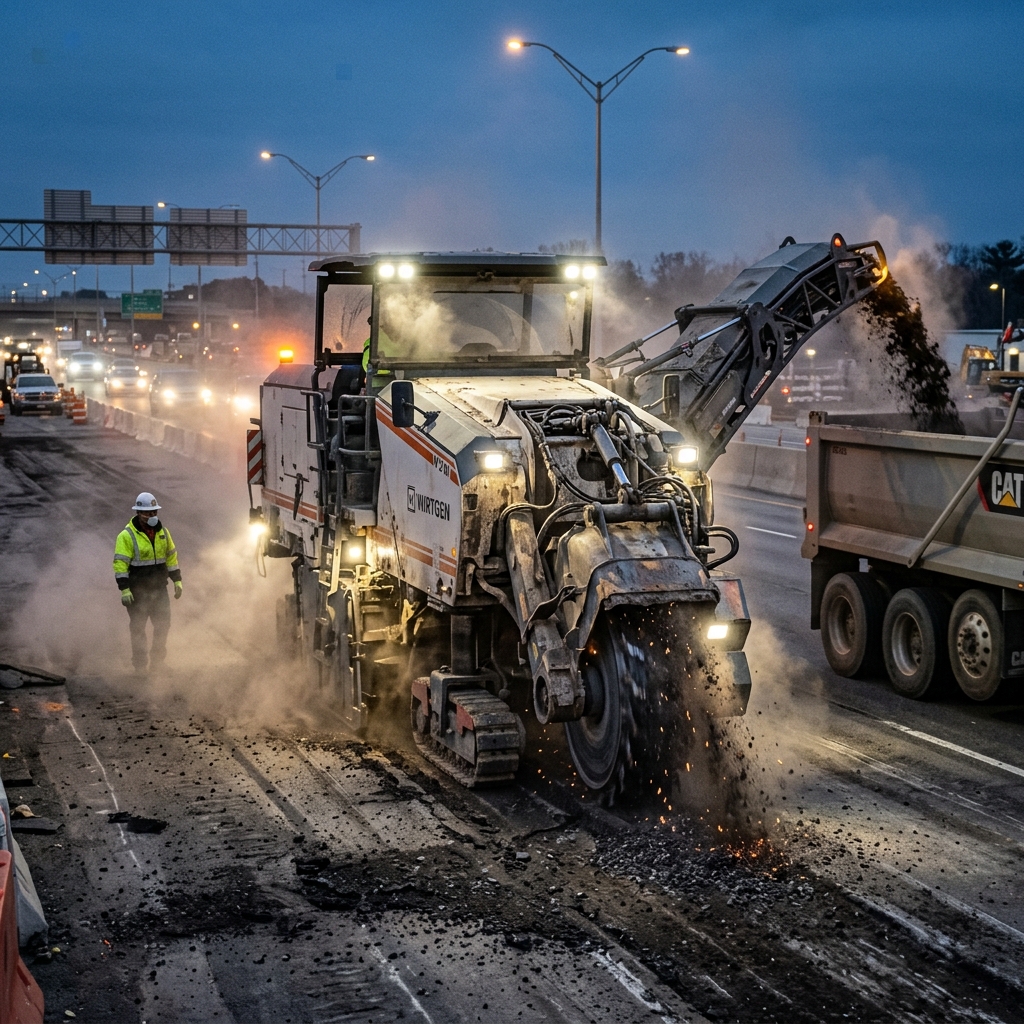
Subgrade Compaction & Laser Grading
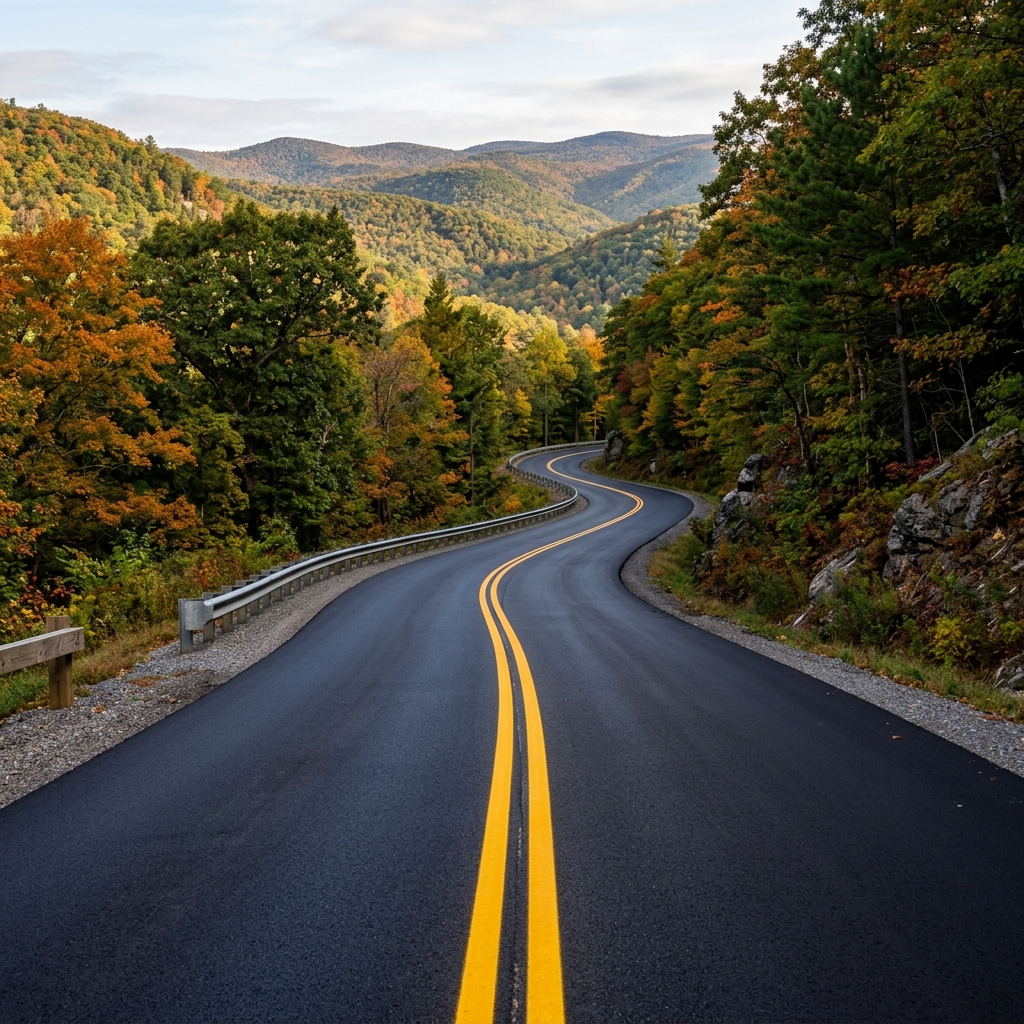
Vibratory Roller Compaction (95%+ Density)
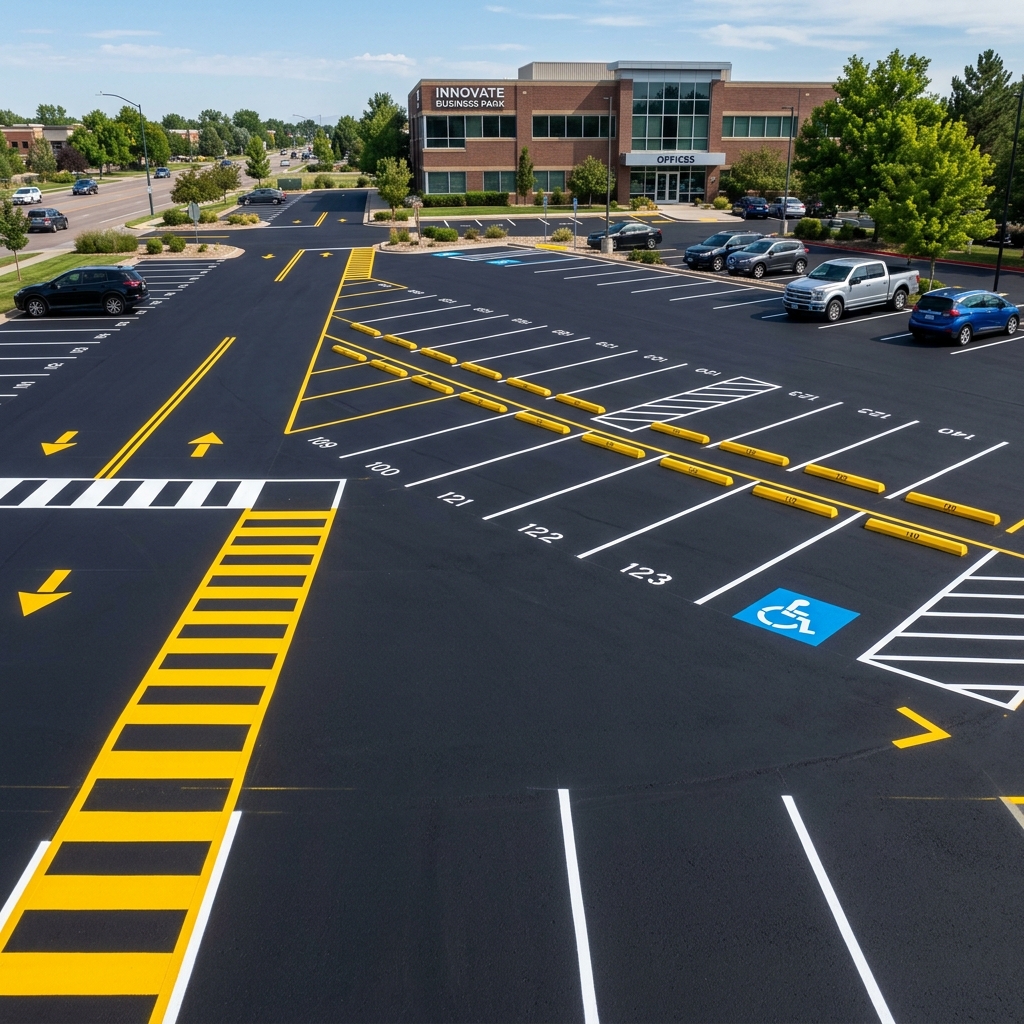
ADA Compliant Line Striping & Sealcoating